All Categories
Featured
Table of Contents
Performance stops to be a one-time project or a buzzword; it becomes a core cultural value that drives daily choices. By incorporating these KPIs into your regular evaluations and strategic preparation, you develop sustainable momentum that not only enhances profitability however likewise creates a more resilient, nimble, and competitive organization poised for long-term success.
All set to build your operational strategy on a rock-solid structure? supplies safe and secure, reliable, and high-performance cloud hosting for your necessary tax, accounting, and company applications, releasing you to concentrate on optimizing the procedures that matter many. Discover how a seamless cloud environment can enhance your firm's performance by going to Cloudvara today.
Determining productivity at scale requires more than output counts. When efficiency is not measured, ineffectiveness accumulate and efficiency declines.
Hours worked, presence, or keystrokes do not show real performance. Metrics ought to show completed work, provided value, and preserved quality.
Legacy Vs Modern Cost Governance Tactics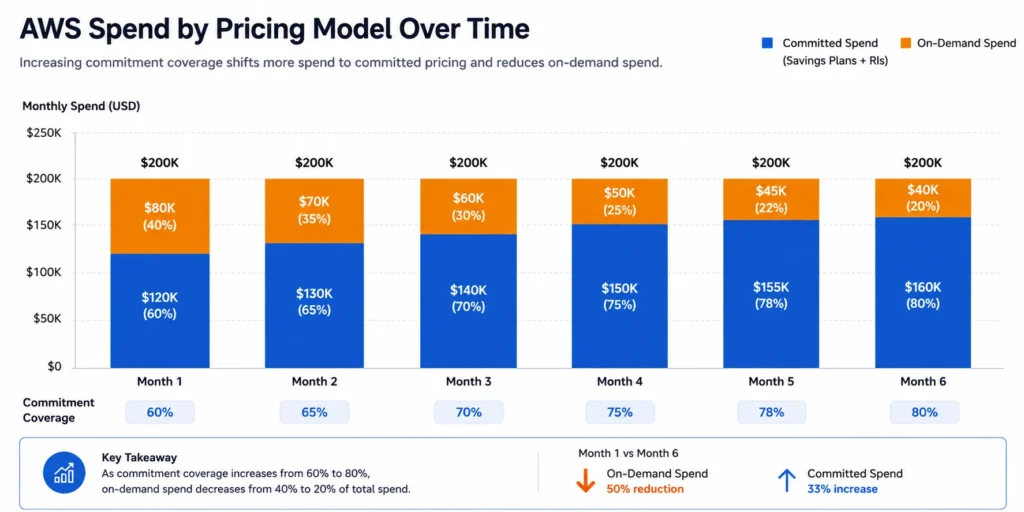
Equally essential, measuring productivity highlights where your organization might be lagging. Today's work environment makes standard productivity hints less pertinent. Leaders can no longer depend on passive face-time as a proxy for output and they should not. Consuming over old-school metrics like hours online has actually led to what Microsoft scientists dubbed "efficiency paranoia," where supervisors fear remote workers are slacking, often prompting intrusive monitoring.
Boosting Enterprise Asset Performance and ROI
Instead, leading companies track a portfolio of metrics that, together, capture how well business is utilizing its time and resources. The precise KPIs might vary by market and business, however below are some of the most common and helpful efficiency metrics: This measures how much profits the business creates per worker.
Tracking this gradually shows whether the company is improving its ability to transform people into company output. These metrics demonstrate how dependably and quickly teams provide work. Job conclusion rate compares prepared work to completed work, while cycle time measures the length of time tasks draw from start to end up. Together, they expose execution efficiency and emphasize workflow traffic jams.
Low usage points to underuse or process friction, while regularly high usage can signal overload. This metric helps make sure work is distributed efficiently without creating burnout. Performance needs to account for quality. High mistake or flaw rates decrease real output by increasing rework. Low mistake rates indicate effective execution and sustainable performance.
Performance depends upon labor force availability. Lack rates directly minimize capability and can indicate deeper issues such as disengagement or excessive work. Keeping an eye on absence and turnover helps companies address productivity losses connected with workforce instability. Choose metrics that line up with your organization model and objectives. A software application company may keep track of implementation frequency or tickets resolved per engineer, whereas a production company will focus on units produced per hour and maker downtime.
It's much better to track a couple of meaningful KPIs than to overload on lots of statistics nobody can act on. While measuring efficiency is vital,. Here are some mistakes to prevent: Determining hours, log-ins, or visible activity puzzles busyness with productivity. These inputs do not reflect worth produced and frequently encourage performative behavior rather than real results.
Achieving Peak Cloud Performance for 2026
Performance can not be caught with one number. Single-metric measurement distorts habits and causes crucial work to be neglected. A balanced set of metrics covering output, quality, and execution effectiveness is needed to reflect real efficiency. Metrics that are simple to track but unrelated to results misguide decision-making. Every performance metric needs to plainly map to a company goal and encourage the best habits.
Efficiency metrics that reward overwork or continuous schedule lead to burnout and turnover. Sustainable productivity depends on maintaining worker capability over time.
Measuring enterprise efficiency requires presence into how work actually takes place across teams, tools, and time. Worklytics is designed to supply that visibility by translating everyday work activity into objective, organization-wide performance insights.
The platform determines indicators such as focus time, conference load, collaboration strength, and responsiveness. These signals assist organizations assess whether workers have sufficient undisturbed time to execute core work and whether collaboration is making it possible for or hindering productivity. By analyzing these patterns with time, Worklytics allows companies to discover patterns that directly affect enterprise productivity, including growing conference overhead, increasing after-hours work, or decreasing execution capability.
2026 Cloud Fiscal Governance
Worklytics makes it possible for benchmarking across groups, departments, and time durations, providing a clear view of efficiency circulation within the company. Leaders can determine which operating designs support greater output and which present friction. Test report of Worklytics in Office Analytics BenchmarksTrend analysis enables companies to track whether productivity is enhancing or deteriorating as the service scales, restructures, or embraces new tools.
Worklytics is developed with business personal privacy requirements as a foundational concept. All efficiency data is aggregated and anonymized, without any individual-level reporting and no access to message or file content. Just metadata is examined to understand work patterns at scale. Personal privacy style of WorklyticsThis design makes sure that productivity measurement stays focused on systems and workflows rather than individual security.
Worklytics supports significant business personal privacy and data protection standards, making it appropriate for global companies. Worklytics is not restricted to reporting metrics. Its dashboards are created to support decision-making by connecting productivity patterns to organizational outcomes. Leaders can assess the effect of operational modifications such as meeting policy changes, tooling consolidation, or work rebalancing, and observe how productivity responds.
Balancing Cloud Costs Vs Performance MetricsMaintaining Optimal IT Performance for 2026
Rather of relying on instinct or anecdotal feedback, organizations can utilize Worklytics data to make targeted, evidence-based modifications that enhance enterprise productivity in time. Worklytics makes it possible for companies to determine business productivity where it really lives: in how work streams across groups, tools, and time. By focusing on execution capacity, cooperation efficiency, and focus preservation, the platform offers a practical structure for enhancing performance at scale.
In an age where insight beats intuition, Worklytics supplies the presence you require to drive performance to brand-new heights. Enterprise performance measures how successfully a company converts labor and resources into company output. It directly affects profitability, scalability, and functional effectiveness. Without measurement, inadequacies compound and efficiency deteriorates. Organizations that actively determine productivity regularly surpass those that do not.
Understanding work should be determined through outcome-based signs rather than activity. Relevant metrics consist of completed deliverables, progress versus objectives, quality of output, and service effect.

Latest Posts
Aligning Cloud Infrastructure With 2026 Efficiency
Is Your IT Budget Prepared for 2026?
How Cost Governance Scales 2026 IT Infrastructure